
scala 40



Con l’applicazione Scala 40 di Onmadesoft è possibile giocare a Scala 40 gratis sui dispositivi
Apple e Android Google Play.
Vediamo le caratteristiche dell’App
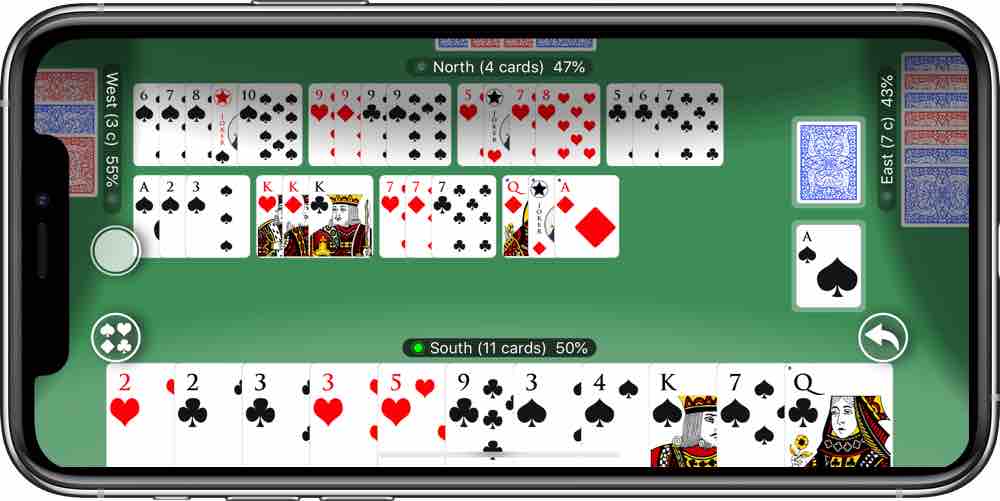
Giocate gratuitamente contri i vostri iPhone, iPad e Mac o contro altri giocatori online.
Due modalità di gioco offline contro il vostro dispositivo: Partita Singola e Partita a
Punti.
Due modalità di gioco online contro persone reali: Partita Singola e Partita a Punti.
Possibilità di sospendere e riprendere le partite offline (ad esempio per fare una pausa o per
accettare un invito al gioco online si sta giocando offline)
Numero dei giocatori configurabile (da due a quattro)
Classifiche online: una annuale e una mensile per ogni variante di gioco, a queste si aggiungono
classifiche di Natale, Pasqua, Ferragosto, Halloween, Primo Maggio (e altre ancora in
arrivo).
Geo Classifiche: una mappa per visualizzare le classifiche su base geografica (ad esempio per
confrontarti con chi gioca nei tuoi paraggi)
ll gioco online è basato sul regolamento della Federazione Italiana Scala 40
La versione del gioco per iPhone e iPad è finanziata tramite annunci pubblicitari è possibile
disattivarli per sempre acquistando la versione del gioco senza pubblicità.
Per suggerimenti o aiuto contattate l'assistenza, saremo lieti di aiutarvi
se giocare a 'Scala 40' vi diverte, dedicateci un minuto scrivendo una bella recensione:
è sempre
di
grande aiuto e incoraggiamento
La Scala Quaranta è uno dei giochi di carte più diffusi in Italia e ha una storia di oltre 100 anni, si espande infatti orientativamente sul finire della Prima Guerra Mondiale in Ungheria ereditando gran parte delle regole dal Ramino, dal quale discende ma si differenzia. In Italia la Scala 40 arriva intorno agli anni ‘30 dove giochi come il Gin, Wist e il Ramino erano già largamente “giocati”. Nel corso del tempo e con l’avvento della tecnologia, la Scala 40 è approdato anche online diventando uno dei giochi di carte più diffusi in rete nelle varie piattaforme che offrono servizi di gaming. La Scala 40 online mantiene il regolamento del gioco reale con la possibilità di giocare sia in modalità multiplayer che con amici.
La Scala 40 ha una terminologia ben precisa, ci sono infatti termini che rendono il gioco ben
riconoscibile. Vediamoli:
Il mazzo delle carte coperte rimanenti a seguito della distribuzione delle stesse ai giocatori e dal
quale i giocatori possono pescare (leggi anche Scala 40 regole) si
dice
Tallone;
Il mazzo delle carte scartate dai giocatori ad ogni turno si chiama Pozzo o Scarti;
Si dice “gioco” una qualsiasi combinazione o sequenza, laddove per combinazione si intende l’insieme di
3 o 4 carte di uguale valore con semi diversi e per sequenza (o scala), l’insieme formato da un minimo
di 3 ad un massimo di 13 carte con valori in sequenza di uguale seme;
Si dice “Aprire” quando vengono calati sul tavolo da gioco un insieme di giochi del valore di almeno 40
punti;
Si dice “Chiudere” quando vengono calati giochi fino a rimanere senza carte in mano
Per quanto riguarda il valore delle carte, quelle che vanno dal 2 al 10 hanno il valore nominale
(quindi la carta di valore 2, varrà 2 punti e così via);
le figure (fante, re, regina) hanno un
valore
di 10 punti ognuna;
l’Asso ha valore variabile, varrà 1 se usato in sequenze A-2-3 mentre varrà 11
punti se utilizzato in giochi J-Q-K-A oppure in combinazioni A-A-A (quindi se ho 3 carte A-2-3 avrò
fatto 6 punti totali;
se ho assi in accoppiamento a J Q K A il valore singolo dell’asso sarà di 11
per
un totale di 41 punti); il Jolly vale 25 punti se in mano oppure acquisisce il valore della carta che
sostituisce nei giochi sul campo (leggi anche I
Punti nella Scala 40
Come si gioca a Scala 40? Per giocare a Scala 40 occorrono
due mazzi da 54 di
carte francesi, le carte da Scala 40, i giocatori possono variare
da 2 ad un
massimo di 6 e si gioca in “autonomia”, ossia in modo singolo a meno che non si giochi in 4 e quindi
sarà possibile giocare a coppie.
Il mazziere, chi gestisce cioè il gioco, distribuisce 13 carte
coperte
ad ogni giocatore, in senso orario, una alla volta.
Il gioco inizia con la scoperta della prima
carta
del mazzo rimasto (che per alcuni deve essere diversa dal jolly) determinando l’inizio del “pozzo”.
Le
carte in mano ai giocatori possono essere guardate soltanto a seguito della scoperta della prima carta
da parte del mazziere.
"Offensive Countermeasures: The Art of Active Defense" by John Strand and Paul Asadoorian proposes shifting cybersecurity from passive defense to active, using techniques designed to confuse, trace, and disrupt attackers. The strategy focuses on setting traps, such as "honeytokens" that report an attacker's location, rather than relying solely on traditional firewalls. Read more about this approach at Archive.org What Is Active Defense? - Fortinet
"Offensive Countermeasures: The Art of Active Defense" by John Strand and Paul Asadoorian outlines a strategy of utilizing limited offensive actions to disrupt attackers after they have breached a perimeter. The text centers on the pillars of annoyance, attribution, and attack to raise the costs for adversaries, while emphasizing legal and ethical constraints. Access the digital book at Internet Archive Offensive Countermeasures: The Art of Active Defense As the book title states, Offensive Countermeasures breaks down the same into three categories: Annoyance, Attribution and Attack. CyberCanon
Offensive Countermeasures: The Art of Active Defense " is a foundational text in cybersecurity by authors John Strand, Paul Asadoorian, Benjamin Donnelly, and Ethan Robish . It shifts the focus from traditional, passive "plug-and-play" security (like firewalls and antivirus) toward active defense , which involves using limited offensive actions to annoy, identify, and disrupt attackers who have already breached a network. The Three Pillars of Active Defense The book categorizes active defense strategies into three core operational stages: Annoyance : The primary goal is to waste the attacker’s time and resources. Techniques like honeyports (fake open ports) and honeypots (decoy systems) force attackers to expend energy on non-existent targets, slowing their progress. Attribution : This phase focuses on identifying the attacker and understanding their tactics, techniques, and procedures (TTPs). By seeding systems with honeywords (fake passwords) or specialized tracking pixels, defenders can gain insight into who is attacking and from where. Attack : While the title suggests striking back, the book emphasizes doing so within legal bounds. This often means "attacking" the attacker’s tools or access methods—such as gaining entry to their Command & Control (C2) infrastructure—to deny them the contested digital area. Key Concepts and Frameworks Active Defense vs. Passive Defense : Passive defense relies on blocking and patching. Active defense is "proactive, anticipatory, and reactionary," assuming the adversary is already "inside your gates". The Aikido Analogy : The authors liken active defense to Aikido , where the defender redirects the attacker's energy against them rather than initiating an unprovoked strike. OODA Loop : Active defense aims to disrupt the attacker’s OODA loop (Observe, Orient, Decide, Act), forcing them to react to the defender's deceptive maneuvers rather than following their original attack plan. Legal and Strategic Considerations "Poison, Not Venom" : The book advises defenders to "lay traps inside your systems, but don't attack theirs". This distinction is critical to avoid violating laws like the Computer Fraud and Abuse Act (CFAA). Deception as a Layer : Active defense is not a replacement for traditional security but a complementary layer designed to increase detection speed and reaction time ( Professional Warning : Readers are cautioned to seek legal counsel and obtain organizational authorization before deploying these techniques, as "hacking back" can lead to significant civil and criminal liability, especially if third-party systems are affected. For more up-to-date practical training, the authors and Black Hills Information Security offer modern resources and podcasts that build upon the book's 2013/2017 foundations. If you tell me what you're interested in, I can provide more details: Implementation (e.g., how to set up a basic honeyport) Legal nuances (e.g., current laws regarding "hacking back") Specific tools (e.g., programs mentioned in the book) Offensive Digital Countermeasures - The Cyber Defense Review
Offensive Countermeasures: The Art of Active Defense Introduction In today's digital landscape, organizations face an increasing number of sophisticated cyber threats. Traditional defensive measures, such as firewalls and intrusion detection systems, are no longer sufficient to protect against these threats. Offensive countermeasures, also known as active defense, have become a crucial component of a comprehensive cybersecurity strategy. This guide provides an in-depth look at offensive countermeasures, their benefits, and how to implement them effectively. What are Offensive Countermeasures? Offensive countermeasures refer to proactive security measures that involve actively engaging with attackers, disrupting their operations, and deceiving them into thinking that the organization's systems and data are not accessible. The goal of offensive countermeasures is to: offensive countermeasures the art of active defense pdf
Detect and respond to threats in real-time Disrupt and deceive attackers Gather intelligence on threat actors Improve incident response and threat hunting
Benefits of Offensive Countermeasures
Improved threat detection and response : Offensive countermeasures enable organizations to detect and respond to threats more quickly and effectively. Reduced risk : By actively engaging with attackers, organizations can reduce the risk of a successful breach. Enhanced incident response : Offensive countermeasures provide valuable insights into threat actors' tactics, techniques, and procedures (TTPs), which can inform incident response and threat hunting. Intelligence gathering : Offensive countermeasures can provide valuable intelligence on threat actors, which can be used to improve overall cybersecurity posture. - Fortinet "Offensive Countermeasures: The Art of Active
Types of Offensive Countermeasures
Honeypots : Decoys that mimic real systems or services to attract and trap attackers. Honeynets : Networks of honeypots that provide a more comprehensive view of attacker behavior. Deception technology : Solutions that create a fake environment to deceive attackers into thinking they have found a vulnerable system or data. Active threat hunting : Proactive searching for threats within an organization's network. Red teaming : Simulated attacks on an organization's systems and defenses to test their effectiveness.
Implementing Offensive Countermeasures
Assess your organization's risk : Identify potential vulnerabilities and threats to determine the best course of action. Develop a strategy : Define goals, objectives, and scope for offensive countermeasures. Choose the right tools : Select tools and technologies that align with your strategy and goals. Train personnel : Ensure that personnel have the necessary skills and knowledge to implement and manage offensive countermeasures. Monitor and analyze : Continuously monitor and analyze the effectiveness of offensive countermeasures.
Best Practices
Seppur il gioco di carte Scala 40 abbia un regolamento ufficiale,
esistono moltissime varianti utilizzate soprattutto nei vari Tornei di
Scala 40 che vengono organizzati in giro per il mondo.
Le varianti dei giochi di carte sono
diffusissime, la cosa importante da tenere a mente è che prima di adottarle tutti i partecipanti
al tavolo dovranno essere d’accordo. Alcune varianti in voga sono le seguenti:
Chiaramente è da ricordare che la Scala 40 è a tutti gli effetti un gioco di strategia, ogni variante quindi presupporrà una diversa attitudine nell’affrontare le Strategie della Scala 40