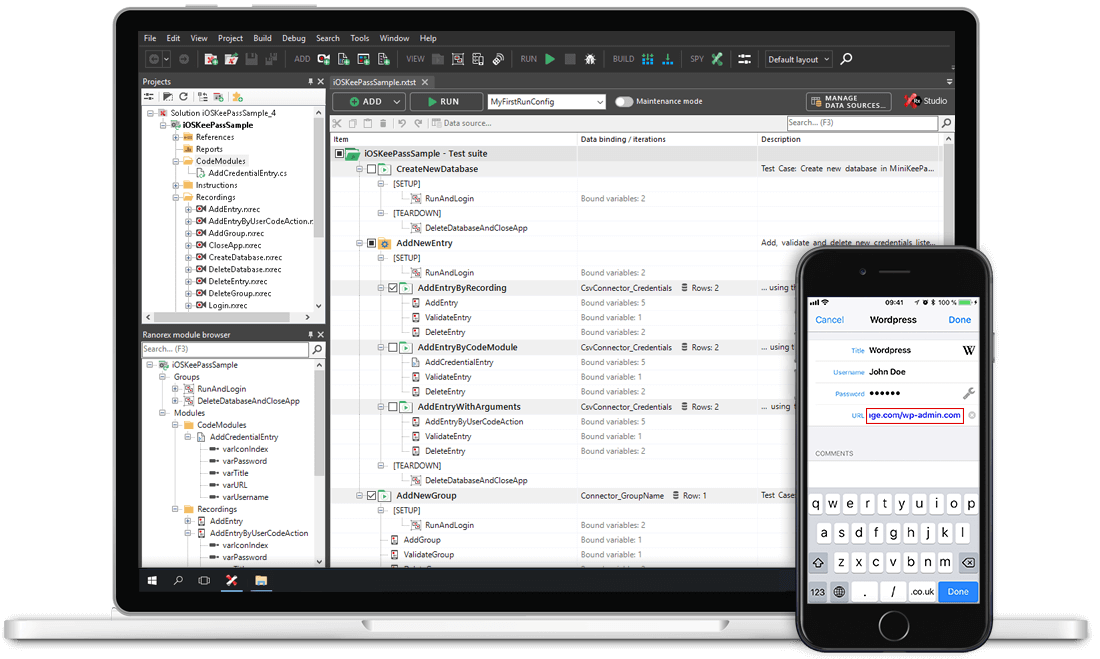
When teams overlook black-box testing, user-facing bugs can slip into production. That leads to damaged customer trust, increased support costs, and a slower release schedule. Because black-box testing doesn’t rely on code access, it gives QA teams a true-to-life view of how features perform in the hands of real users. Uncover UI issues, workflow failures, and logic gaps that internal testing might miss. By validating behavior at the surface level, black-box testing becomes a critical safeguard for user satisfaction and application reliability.
Black-box testing validates software by focusing on its external behavior and what the system does without looking at the internal code. Testers input data, interact with the UI, and verify outputs based on expected results. It’s used to evaluate functionality, usability, and user-facing workflows.
This technique is especially useful when testers don’t have access to the source code or when the priority is ensuring a smooth user experience. It allows QA teams to test applications as end users would–click by click, screen by screen—making it practical for desktop, web, and mobile platforms.
Black-box testing is most valuable when the goal is to validate what the software does without needing to understand how it’s built. It’s typically used after unit testing and during system, regression, or acceptance phases, especially when verifying real-world user experiences across platforms.
After flashing v3.x, my link speed drops to 100Mbps. Solution: The new firmware resets EEPROM bits for auto-negotiation. Manually force 1Gbps full-duplex in your OS driver settings, then toggle back to auto-negotiation. This "trains" the PHY.
1. The Manufacturer’s Latest Stable Build (The Safe Choice)
frequently post firmware updates for specific chipsets (like the QCM6125) that may be cross-compatible if the hardware matches. Common Firmware Improvements
Frequently discussed in enthusiast forums, the Community Beta (often labeled v2.2.0b) unlocks several "hidden" features.
A common subplot in the 825X Pro story involves the frustratingly slow startup times. The Problem: Some units suffer from boot times lasting anywhere from 2 to 5 minutes The Hero Fix: Tech-savvy users have found that updating the BIOS/Firmware and enabling specific settings like "Memory Context Restore" can slash those wait times down to a mere 15–25 seconds